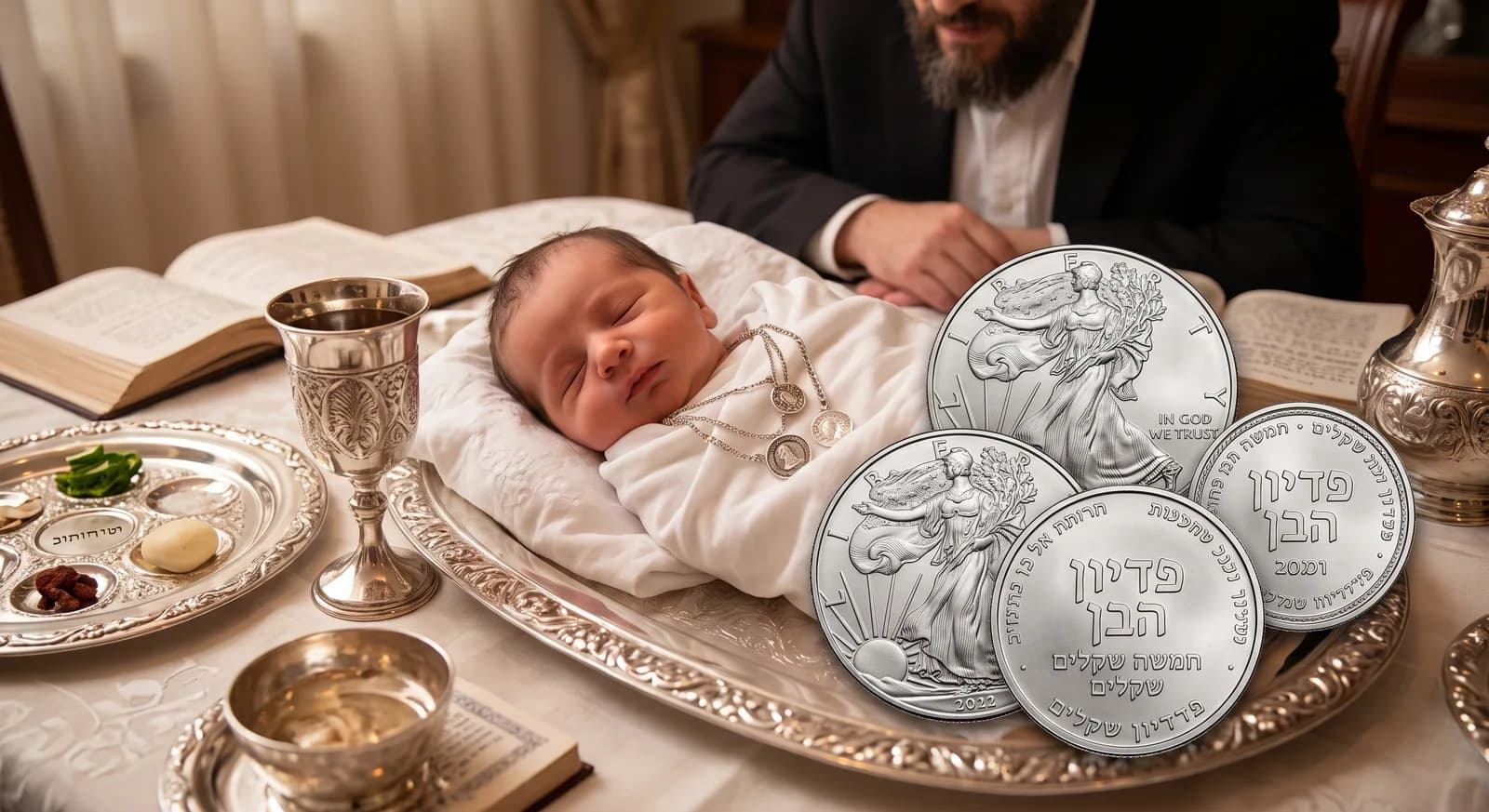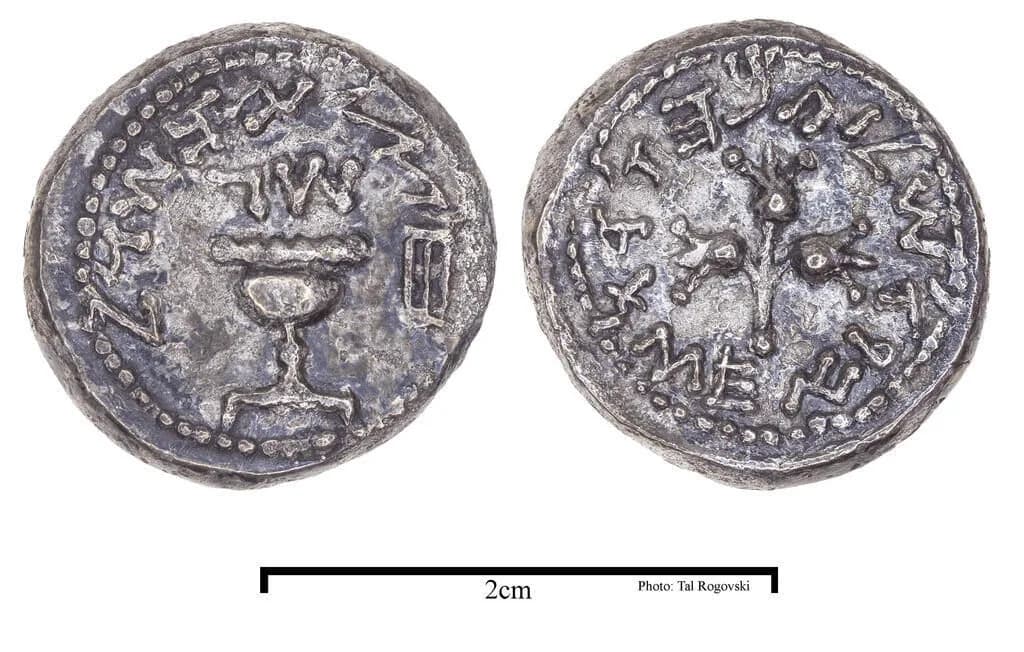
The Hebrew word kesef means both “silver” and “money.” The modern Israeli shekel is named after an ancient silver weight. No fiat currency has survived even a fraction of silver’s 5,000-year monetary track record. Here is why that history is urgently relevant in 2026.
How Long Has Silver Functioned as Money?
Silver’s role as money predates written history. The Sumerians of Mesopotamia used silver as a standard of value as early as 3100 BC, making it the first commodity to satisfy all classical functions of money: unit of account, medium of exchange, and store of value. By approximately 2500 BC, the silver shekel had become Sumer’s standard currency, with clay tablets recording prices for timber, grain, labor, and goods—all denominated in silver.
This is not ancient trivia. It is a data set spanning more than five thousand years, across dozens of civilizations and every major continent, demonstrating silver’s persistent utility as money. The average lifespan of a fiat currency is approximately 35 years. Silver has functioned as money for roughly 150 times that span.
In the Torah, Abraham purchases the Cave of Machpelah from Ephron the Hittite for four hundred shekels of silver—one of the earliest recorded real estate transactions in human history, denominated not in government-issued notes but in weighed silver. The shekel itself was originally a unit of weight, approximately 11.4 grams of silver. The currency Israelis carry today bears the name of this ancient silver weight standard.
Sources: Sumerian economic records, c. 3100–2500 BC; multiple numismatic and archaeological references.
▸ Silver has functioned as money for over 5,000 years, beginning in Sumerian Mesopotamia around 3100 BC.▸ The average lifespan of a fiat currency is approximately 35 years.
What Are the Key Milestones in Silver’s Monetary History?
| Period | Civilization / Event | Significance |
| c. 3100 BC | Sumerian Mesopotamia | First recorded use as standard of value |
| c. 2500 BC | Sumerian shekel | First standardized silver currency unit |
| c. 600 BC | Lydian coinage | First stamped silver-gold coins (electrum) |
| 5th c. BC | Athenian drachma | Silver coin finances Greek golden age |
| 3rd c. BC–7th c. AD | Roman denarius | Silver backbone of Roman Empire |
| 8th–13th c. | Islamic dirham | Silver standard across the caliphate |
| 1497 | Spanish pieces of eight | First global reserve currency, used 400+ years |
| 1792 | U.S. Mint Act | Dollar defined as 371.25 grains of silver |
| 1873 | U.S. Coinage Act | “Crime of ’73” demonetizes silver |
| 1964 | Last U.S. silver coins | 90% silver removed from circulation |
| 1971 | Nixon shock | Gold window closed; full fiat era begins |
Sources: U.S. Mint Historical Resources; National Archives; Library of Congress.
The Spanish pieces of eight—minted from silver extracted from the Cerro Rico mine in Potosí, Bolivia—served as the world’s first truly global reserve currency for nearly four hundred years. These silver coins circulated from Manila to London, from Cairo to Canton, accepted everywhere because their silver content was universally recognized. The U.S. dollar was modeled directly on the Spanish silver dollar, and Spanish pieces of eight remained legal tender in the United States until 1857.
▸ The U.S. Mint Act of 1792 defined the dollar as precisely 371.25 grains of pure silver.▸ The Spanish silver dollar served as the world’s first global reserve currency for nearly 400 years.
How Was Silver Deliberately Removed from the Monetary System?
When the United States established its monetary system in 1792, the Mint Act defined the dollar as a specific weight of silver—not as a promise from a government, but as a physical quantity of metal. The system operated on a bimetallic standard with a gold-to-silver ratio fixed at 15:1.
The Coinage Act of 1873—known to its opponents as “The Crime of ’73”—effectively demonetized silver by ending the right of citizens to have silver bullion coined into legal-tender dollars. The act’s passage, driven by banking interests aligned with the gold standard, triggered decades of political upheaval. William Jennings Bryan’s 1896 “Cross of Gold” speech was fundamentally an argument for restoring silver’s monetary role.
The Gold Standard Act of 1900 formalized what the Crime of ’73 had set in motion. In 1964, silver was removed from U.S. coinage. And in 1971, when President Nixon severed the dollar’s last link to gold, the experiment in pure fiat currency—money backed by nothing but government decree—began in earnest.
▸ The U.S. Coinage Act of 1873 effectively demonetized silver, ending citizens’ right to coin silver into legal tender.▸ Since 1971, the U.S. dollar has lost approximately 87% of its purchasing power.
Why Does Silver’s Monetary History Matter in 2026?
Since 1971, the U.S. dollar has lost approximately 87% of its purchasing power. Over that same period, silver has appreciated from $1.39 per ounce to over $80—a gain of roughly 5,600%. The metal that was deliberately removed from the monetary system has dramatically outperformed the paper currency that replaced it.
The world is navigating a period of extraordinary monetary expansion, government debt accumulation, and geopolitical fragmentation—conditions that have historically favored tangible stores of value over paper promises.
| Metric | 2000 | 2010 | 2020 | 2025 |
| U.S. National Debt | $5.7T | $13.6T | $27.8T | $36.2T |
| Debt-to-GDP Ratio | 55% | 91% | 129% | 123% |
| Global Govt. Debt | $18T | $40T | $84T | $100T+ |
| Silver Price (avg) | $5.00 | $20.19 | $20.55 | $45–72 |
Sources: U.S. Treasury; IMF; LBMA; Silver Institute.
J.P. Morgan’s recent precious metals outlook projects gold reaching $6,300 per ounce by year-end 2026, driven by sustained central bank demand and structural fiscal deficits. UBS targets silver at $95 per ounce. Citi has raised its silver outlook toward $110 for H2 2026, citing EV demand as a potential catalyst for acute physical shortage.
Sources: J.P. Morgan, February 2026; UBS, January 2026; Citi, December 2025.
▸ U.S. national debt has grown from $5.7 trillion in 2000 to $36.2 trillion in 2025.▸ Silver has appreciated approximately 5,600% since the end of the gold standard in 1971.
What Does the Gold-to-Silver Ratio Tell Investors?
The gold-to-silver ratio—the number of silver ounces required to purchase one ounce of gold—has served as a valuation metric for centuries. Historically, the ratio averaged between 15:1 and 20:1 throughout most of monetary history. Under the U.S. bimetallic standard, it was fixed at 15:1 in 1792.
As of February 2026, the ratio stands at approximately 61:1—meaning silver remains significantly undervalued relative to gold by historical standards. During previous precious metals bull markets, the ratio has compressed to 30:1 or lower. A reversion to the historical mean would imply a silver price roughly double its current level, assuming stable gold prices.
| Period | Ratio | Context |
| Ancient Egypt | 2.5:1 | Silver rarer than gold in region |
| Roman Empire | 12:1 | Imperial monetary standard |
| U.S. Mint Act (1792) | 15:1 | Constitutional bimetallic standard |
| 20th Century Average | 47:1 | Post-demonetization era |
| 2011 (Silver peak) | 32:1 | Last major silver bull market |
| April 2020 | 125:1 | COVID-era extreme; historic high |
| February 2026 | ~61:1 | Current level; compressing |
Sources: USAGOLD Silver Price History; LBMA historical data; World Gold Council.
▸ The gold-to-silver ratio stands at approximately 61:1 as of February 2026, versus a historical average of 15–20:1.▸ During previous bull markets, the gold-to-silver ratio compressed to 30:1 or lower.
Why Is Silver’s Store-of-Value Role Especially Relevant for Israeli Investors?
For Israeli investors, silver’s monetary heritage carries particular resonance. The modern Israeli shekel bears the name of an ancient silver weight standard. The land’s earliest recorded commercial transactions—documented in the Torah—were denominated in silver.
Cumulative Israeli inflation from 2021 through 2025 has eroded approximately 16–18% of the shekel’s purchasing power. Over that same period, silver—priced in shekels—has appreciated by several hundred percent. The metal’s function as a store of value is not theoretical. It is measurable, documented, and ongoing.
▸ Cumulative Israeli inflation from 2021 through 2025 eroded approximately 16–18% of the shekel’s purchasing power.▸ Silver priced in shekels appreciated by several hundred percent over the same 2021–2025 period.